About the Author
As a Ph.D., I spend my days solutioning AI systems and keeping up with the latest algorithms. It's the nights and weekends that get interesting. After work and frequently skipping dinner, I'm behind the keyboard, contemplating themes like the struggle for identity, the friction between reality and illusion, and the insidious ways technology shapes our lives. You can follow her on TikTok for musings on computer science, AI, and her writing journey.
Books that inspire
Over the years, I've collected nuggets of inspiration from several books I truly love: some science fiction and some not.

The Dark Tower series by Stephen King is my favorite series of all time. I have a long-standing infatuation with Roland Deschain. It's Roland's obsession and desperation with the Tower, to Susannah's tragic backstory, and King's worldbuilding: robots, Ka, the where-and-when, Susan Delgado, the glamor, black 13, Blain the Mono, to a hidden sequel of Salem's Lot. I could go on.
"Roland."
He will hear this voice in uneasy dreams for the rest of his life, never quite remembering what he has dreamed, only knowing that the dreams leave him feeling ill somehow - walking restlessly, straightening pictures in loveless rooms, listening to the call to muzzein in alien town squares.
"Roland of Gilead."
This voice, which he almost recognizes; a voice so like his own that a psychiatrist from Eddie's or Susannah's or Jake's when-and-where would say it is his voice, the voice of his subconscious, but Roland knows better; Roland knows that often the voices that sound the most like our own when they speak in our heads are those of the most terrible outsiders, the most dangerous intruders.

Barbara Kingsolver's The Poisonwood Bible isn't sci-fi by any stretch. But it's a powerful story, set in the 1950's in Congo. In my opinion, it's like a white mother's take on Heart of Darkness. Mrs. Price, a mother forced to move her family to a foreign country, leaves her American Betty Crocker lifestyle, to a missionary life abroad led by her Baptist minister husband. Things get tragic, and there's death and suffering. What's left is a dark but logical resignation in her story, which is something I can feel as a wife and mother. Each chapter is told through a different daughter's POV, which inspired me to write the Morfyk Trilogy (although so completely, utterly different it's laughable) in a different character's POV.
Nelson says to think of a good place to go, so when it comes time to die I won't, I'll dissapear and go to that place. He said think of that place every day and night so my spirit will know the way. But I hadn't been. I knew where was safe, but after I got better I forgot to think about it anymore. But when Mama ran down the road with me I saw everybody was going to die. The whole world a-crying and yelling bad. So much noise. I put my fingers in my ears and tried to think of the safest place.
I know what it is: it's a green mamba snake away up in the tree...
- Ruth May, the youngest Price daughter
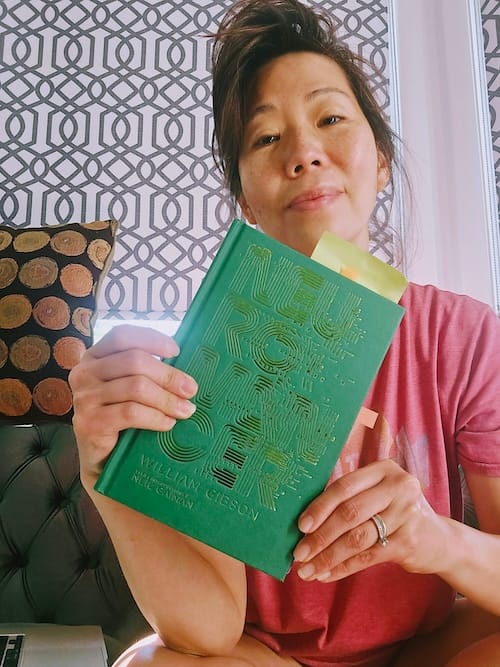
Neuromancer is probably my second favorite book of all time. I recently re-read it and it hits different every time. This time when I read it, it was a lot more visceral for some reason. People who have read it in passing, maybe for school, remember the stand-out characters like Case of course, Molly, maybe even Armitage and yes, Wintermute. But there are so many others - Dixie Flatline, Maelcum, Lady 3Jane. Em. I could say more, but I really don't want to give anything away. All the diverse, weird characters and worlds are even stranger now. Although Gibson invented cyberpunk in 1984 with the publication of Neuromancer, I think he also did something else. He fused a lot of scifi feelings into one book. From the Sprawl and Chiba City to the Zion Cluster in space (Garvey), to that weird castle place where the Tessier-Ashpool's crypt lay, this is a crazy book. And interestingly, there's a lot of anachronisms that mash up across time and space with these characters. To me, Neuromancer is a very stylized, visionary, intellectual book that obviously is a huge inspiration for me. One of the reasons I chose to imprison Wilhelmina in a TV set in Book 3, Convolution, is because of all the TV references in Neuromancer. After all Gibson opens with a famous line: "The sky above the port was the color of television, tuned to a dead channel."
One of my favorite parts of the book:
"Minds aren't read. See, you've still got the paradigms print gave you, and you're barely print-literate. I can access your memory, but that's not the same as your mind." He reached into the exposed chassis of an ancient television and withdrew a silver-black vacuum tube. "See this? Part of my DNA, sort of..." He tossed the thing into the shadows and Case heard it pop and tinkle. "You're always building models. Stone circles. Cathedrals. Pipe-organs. Adding machines. I got no idea why I'm here now, you know that? But if the run goes off tonight, you'll have finally managed the real thing."
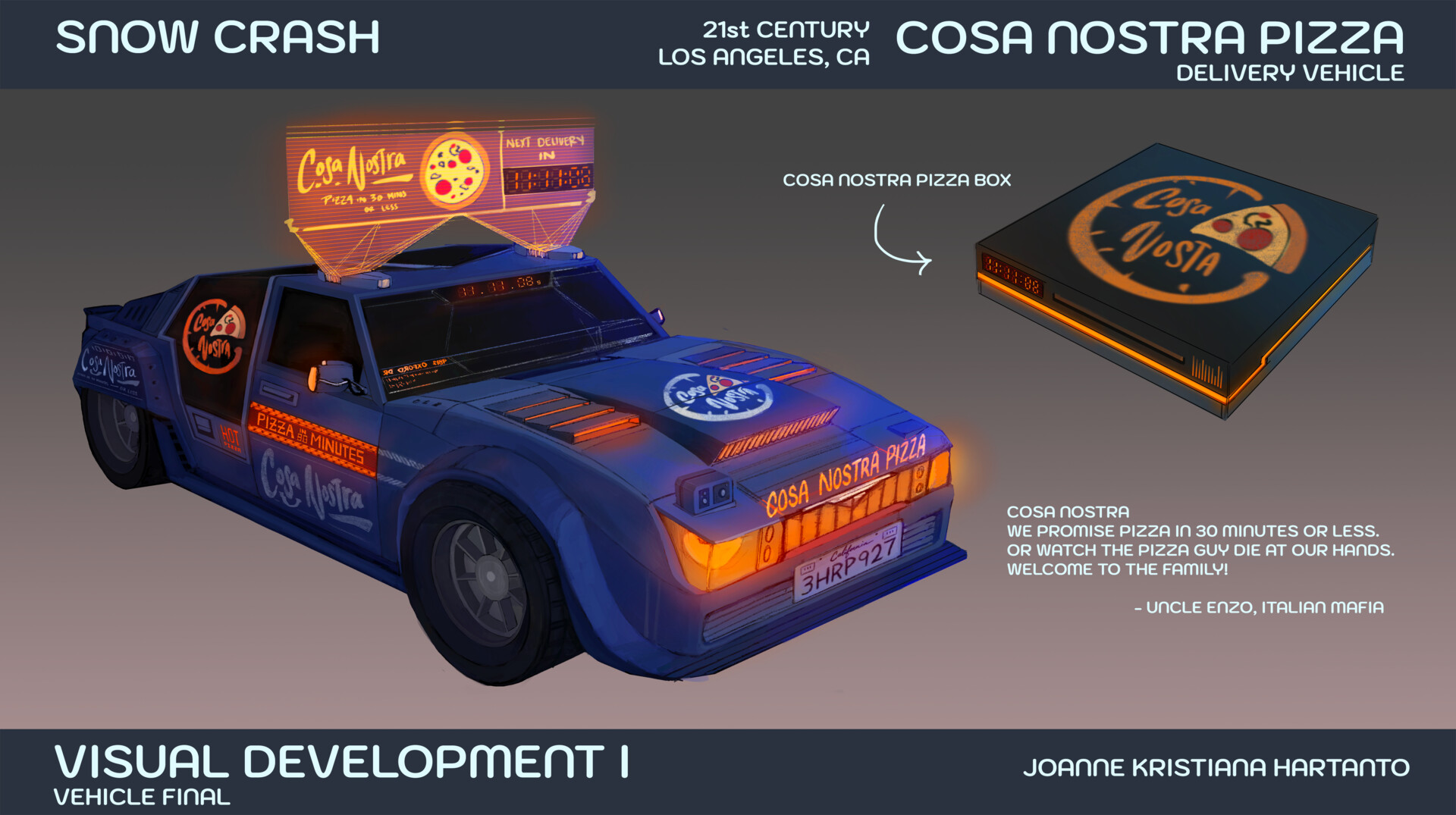 Ref: https://www.artstation.com/artwork/YG89mK
All computer science / cyberpunk-ish fiction seemed to start and end with Philip K. Dick and William Gibson. I didn't find anything else that compared until I read Snowcrash by Neil Stephenson in 2020. The way Stephenson writes hard scifi that's not quantum physics or astronomy, but rather AI (and having done it so early in 1992), was incredible. I was so inspired that I wrote the first two books of the Morfyk Trilogy in second person POV, just like Snowcrash. I even made a t-shirt for CosaNostra Pizza Inc. My Tiktok handle is AIBurbclave, as an homage to the novel.
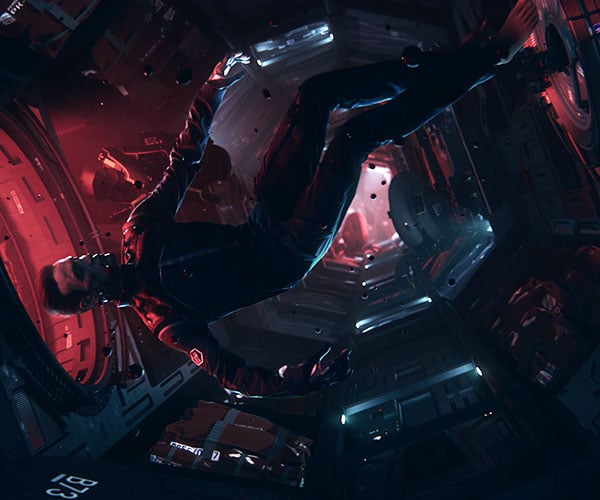
I have to say, one sci-fi book that really did influence me was Blindsight by Peter Watts. This is one of the most interesting passages. If you know, you know:
"You or I, we can only see it one way or the other," Pag said. "Vamps see it both ways at once. Do you have any idea what kind of an edge that gives 'em?"
"Not enough of one."
"Touche. But hey, not their fault neutral traits get fixed in small populations."
"I don't know if I'd call the Crucifix glitch neutral."
"It was at first. How many intersecting right angles do you see in nature?" He waved a dismissive hand. "Anyway, that's not the point. The point is they can do something that's neurologically impossible for Humans. They can hold simultaneous multiple worldviews, Pod-man. They just see things we have to work out step-by-step, they don't have to think about it..."
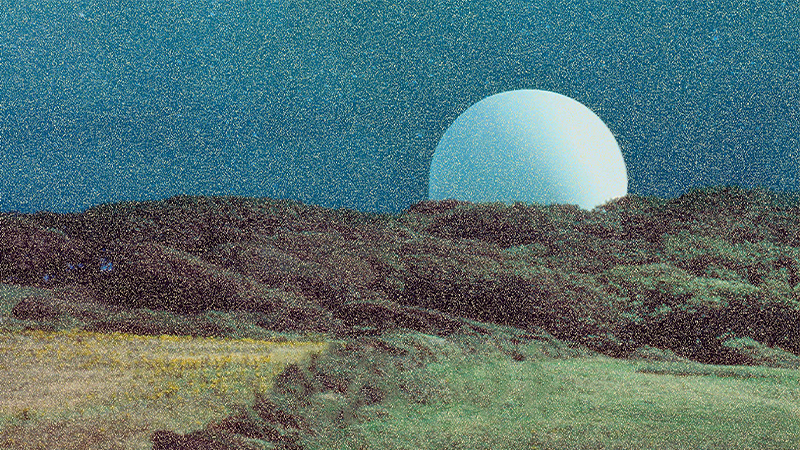
I recently finished Sea of Tranquility by Emily St. John Mandel. I aspire to be like Mandel with her crisp writing style. A unique, super interesting craft of one-line mini-paragraphs that say everything yet give nothing away, leaving you intrigued. The book is about simulation theory, but she doesn't go into it in a hard sci-fi way. There's something magical about how the characters and their converging storylines "explain" the simulation far more than telling.

Lastly, two more books inspired me: Between Two Fires by Christopher Buehlman and sorry for the trope, but Fight Club by Chuck Palahniuk. Okay, with Between Two Fires, God - these part-prefaces! The prose is darkly beautiful. I just can't get enough.
Now devils walked the earth, at first in dreams and then in flesh, and Hell had dominion in diverse kingdoms. Those men who died in furtherance of evil yet walked as shades, and even those who died in goodness might be raised by devils and abused. Sacred places were turned rotten, and holy men abased, so the seed of Adam could take no comfort, and the prayers of men and women would not strengthen the angels of the Lord, who were grown frail.
And the Lord made no answer.

And with Fight Club, it's the POV and the writing style that make it so unique. Like, the fever-dreamish nature of the scenes, going back and forth, between the protagonist (who we never get name) and Tyler Durden. The way the protagonist talks to me/us is in itself a device that portrays the split and loss of identity.
With her watching, I'm a liar. She's the liar. At the introductions, tonight, we introduced ourselves: I'm Bob, I'm Paul, I'm Terry, I'm David.
I never give my real name.
"This is cancer, right?" she said.
Then she said, "Well, hi, I'm Marla Singer."
Nudro Press is an independent publication launched in February 2026 by CY Ordun. If you subscribe today, you'll get full access to the website as well as email newsletters about new content when it's available. Your subscription makes this site possible and allows Nudro Press to continue to exist. Thank you!